How AI Is Becoming Part of Everyday Life
How AI already shapes daily life, from phones and navigation to shopping and smart homes, what the next generation of smart products will do, and the risks.
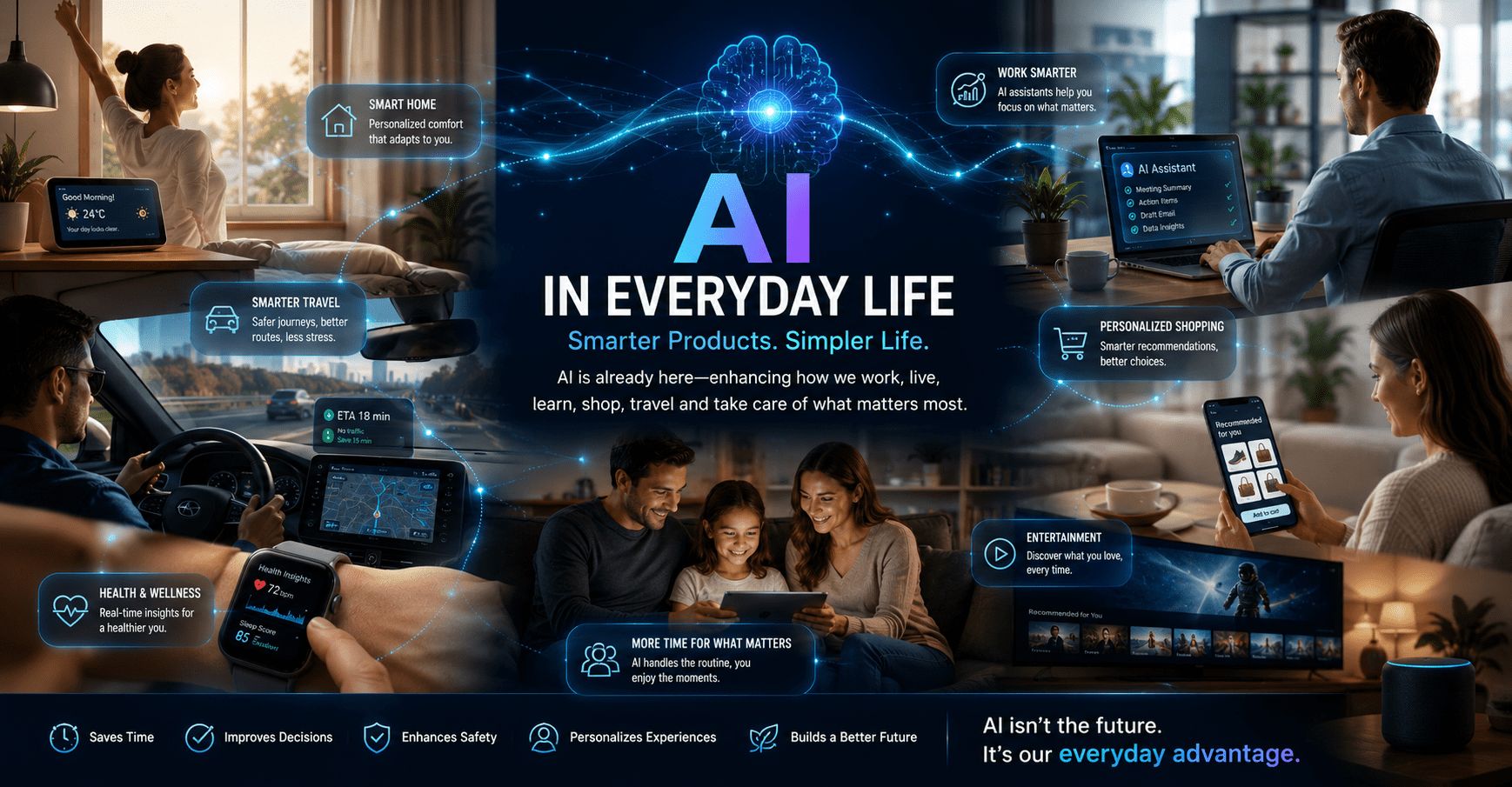
AI is already part of everyday life: it unlocks phones, plans routes, filters email, recommends what to watch and buy, and powers voice assistants. Its biggest everyday value is saving time on routine tasks, and the next wave will move from smarter software to smarter products in homes, cars, workplaces, healthcare and education.
Whether we’re unlocking our phones with facial recognition, asking a virtual assistant for directions, shopping online, or receiving personalized recommendations on streaming platforms, AI is working behind the scenes. And this is only the beginning.
In 2026, AI is no longer just changing businesses. It is transforming how people live, work, learn, shop, travel, communicate, and make decisions every single day. The future of AI isn’t about replacing humans. It’s about making everyday experiences simpler, faster, and smarter.
AI Is Already Around Us
Many people believe they don’t use AI. In reality, most people interact with AI dozens—sometimes hundreds—of times each day without even realizing it. Some familiar examples include:
- Smartphone voice assistants
- Navigation apps
- Email spam filtering
- Online shopping recommendations
- Smart home devices
- Banking fraud detection
- Video streaming suggestions
- Language translation
- Face recognition
- Healthcare appointment reminders
AI has quietly become an invisible assistant.
Everyday Products Powered by AI
| Product | How AI Helps |
|---|---|
| Smartphones | Voice recognition, photography, predictive typing |
| Smart TVs | Personalized content recommendations |
| Cars | Navigation, driver assistance, safety alerts |
| Smart Watches | Health monitoring and activity insights |
| Online Shopping | Personalized product recommendations |
| Banking Apps | Fraud detection and spending analysis |
| Customer Support | AI chatbots and virtual assistants |
| Search Engines | Intelligent search results |
Why AI Matters in Everyday Life
People often associate AI with automation. But its biggest benefit is saving time. Think about how much of the day goes to repetitive activities — searching for information, organizing schedules, managing emails, paying bills, planning meals, tracking expenses, shopping, finding documents.
The Next Generation of Smart Products
The future isn’t just about smarter software — it’s about smarter products.
🧊 Your Refrigerator
- Detect expiring groceries
- Suggest recipes
- Automatically prepare shopping lists
- Recommend healthier meal choices
🚗 Your Car
- Learn your driving habits
- Suggest fuel-efficient routes
- Schedule maintenance automatically
- Detect potential safety risks
💼 Your Workspace
- Summarizes meetings
- Organizes priorities
- Drafts emails
- Finds relevant documents instantly
AI at Home
Smart homes are becoming more intelligent every year. Future AI-powered homes may become proactive rather than reactive:
| AI Feature | Everyday Benefit |
|---|---|
| Smart lighting | Energy savings |
| Intelligent climate control | Personalized comfort |
| AI security monitoring | Better home safety |
| Voice-controlled automation | Convenience |
| Appliance optimization | Reduced electricity costs |
| Predictive maintenance | Fewer equipment failures |
AI in Healthcare & Education
Healthcare is one of the areas where AI can make the biggest difference — early disease detection, medication reminders, personalized wellness plans, mental-health support, remote monitoring, and predictive insights. AI helps people become healthier without replacing doctors.
In education, students increasingly benefit from personalized learning, real-time tutoring, translation, interactive experiences, homework assistance, and accessibility tools — learning that adapts to each individual.
AI in Shopping & At Work
Online shopping is already changing: future systems may understand personal preferences, predict purchases, compare products automatically, negotiate discounts, and recommend sustainable alternatives.
At work, instead of replacing employees, AI increasingly helps professionals write reports, analyze data, create presentations, generate code, and summarize documents — freeing time for meaningful problems.
Challenges We Must Solve
While AI offers tremendous opportunities, responsible adoption remains essential.
| Challenge | Why It Matters |
|---|---|
| Privacy | Protect personal information |
| Security | Prevent misuse |
| Transparency | Build user trust |
| Bias reduction | Fair decision-making |
| Human oversight | Responsible outcomes |
| Accessibility | Ensure AI benefits everyone |
Guiding principle
Technology should always serve people — not the other way around.
Industries Being Transformed
| Industry | AI Impact |
|---|---|
| Healthcare | Very High |
| Education | High |
| Retail | Very High |
| Banking | High |
| Manufacturing | High |
| Transportation | Very High |
| Hospitality | Growing Rapidly |
| Consumer Electronics | Extremely High |
Final Thoughts
Artificial Intelligence is no longer a technology of the future — it is becoming part of everyday life. The biggest transformation isn’t happening inside data centers; it’s happening inside the products we use every day.
The companies that lead the next decade won’t simply build smarter software. They’ll build products that genuinely improve people’s lives.
Because the true purpose of AI isn’t to replace human intelligence — it’s to make everyday life easier, safer, healthier, and more enjoyable.
Frequently asked questions
How is AI used in everyday life?
In smartphone voice assistants, face unlock, navigation apps, email filtering, streaming and shopping recommendations, smart home devices and productivity tools.
What is the main benefit of AI for ordinary people?
Saving time. AI takes over repetitive activities such as searching, scheduling, organizing and planning so people can focus on what matters to them.
What are the risks of everyday AI?
The main concerns are privacy and responsible use. Technology should serve people, so protecting personal data and being transparent about how AI is used are essential.