
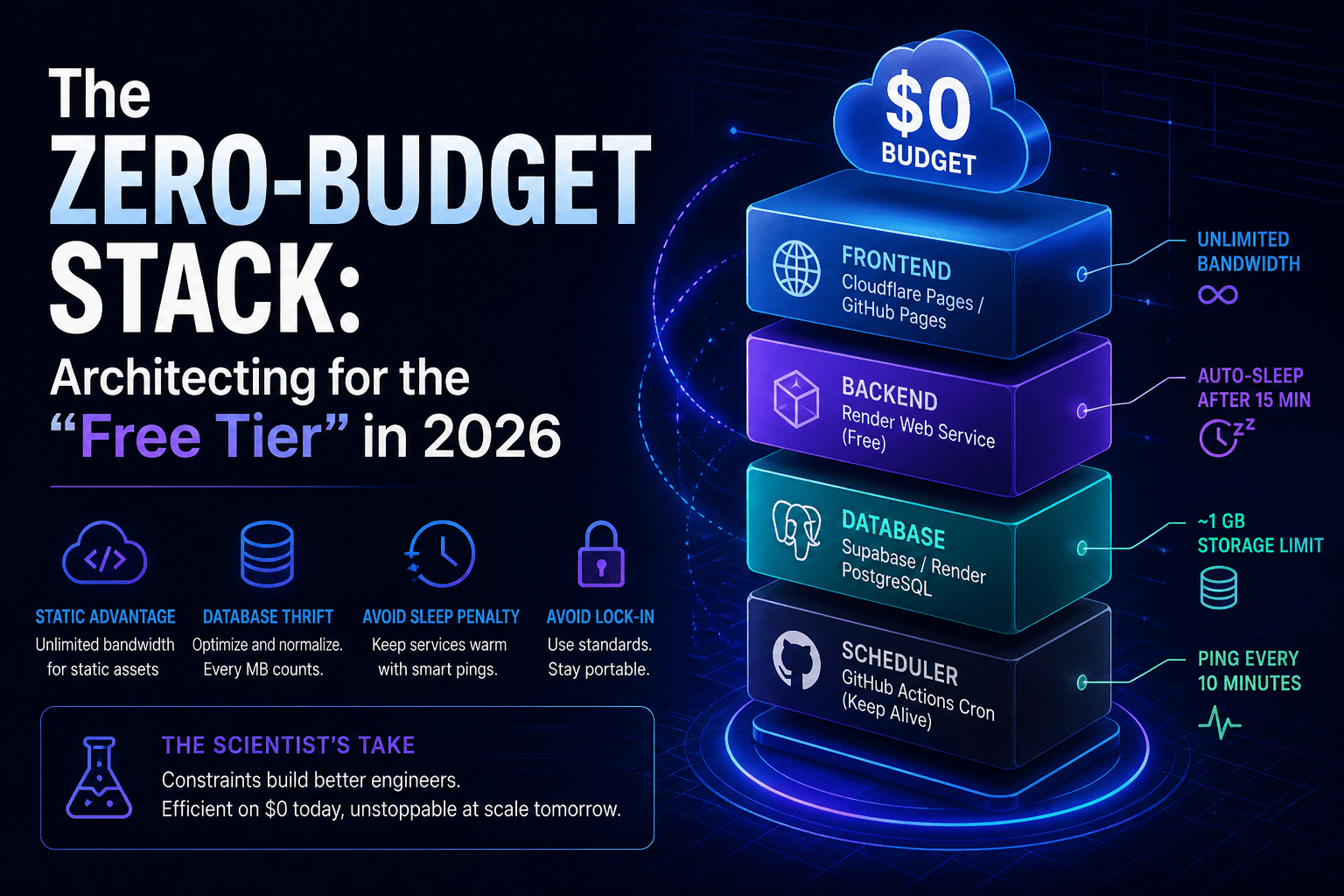
There is a pervasive myth in software engineering that “free” means “fragile.” We assume that unless we are burning through an AWS budget, the system isn’t production-ready. But in 2026, the landscape of free-tier services has shifted. For the savvy architect, “Free” is no longer just for hobbies; it’s a strategic entry point for MVPs and high-performance personal brands.
The Strategy of Elastic Limits: Maintaining a site on free services requires a shift in how we view resource management. Instead of throwing hardware at a problem, we must optimize for efficiency.
- The Static Advantage: Platforms like Cloudflare Pages or GitHub Pages offer unlimited bandwidth for static assets. By offloading your frontend here, you ensure your site remains up even if your backend hits a rate limit.
- Database Thrift: Managed services like Render or Supabase provide high-quality PostgreSQL instances for free, but they come with strict storage caps (usually around 1 GB). This forces you to be disciplined—normalization isn’t just “good practice” here; it’s a survival tactic.
Avoiding the “Sleep” Penalty: Many free-tier web services (like Render’s free web services) spin down after 15 minutes of inactivity. This creates a “cold start” delay for your visitors. A common architectural workaround is using a Cron Job (often available for free via GitHub Actions) to “ping” your service every 10 minutes, keeping the container warm and the response times low.
The Lock-in Trap: The danger of “free” is the proprietary hook. Services like Firebase make it incredibly easy to start, but their specific SDKs make it incredibly hard to leave. As a scientist, I advocate for Standardized Protocols. Use Docker-ready services. Use vanilla PostgreSQL. Use standard PHP-FPM. If a free provider changes their terms, you should be able to migrate your entire stack with a single git push.
The Scientist’s Take: on Architecture is the art of working within constraints. Building a high-performance system on a $0 budget isn’t just about saving money—it’s a stress test for your logic. If your code is efficient enough to run on a free tier, it will be a powerhouse when you finally scale to paid infrastructure.